
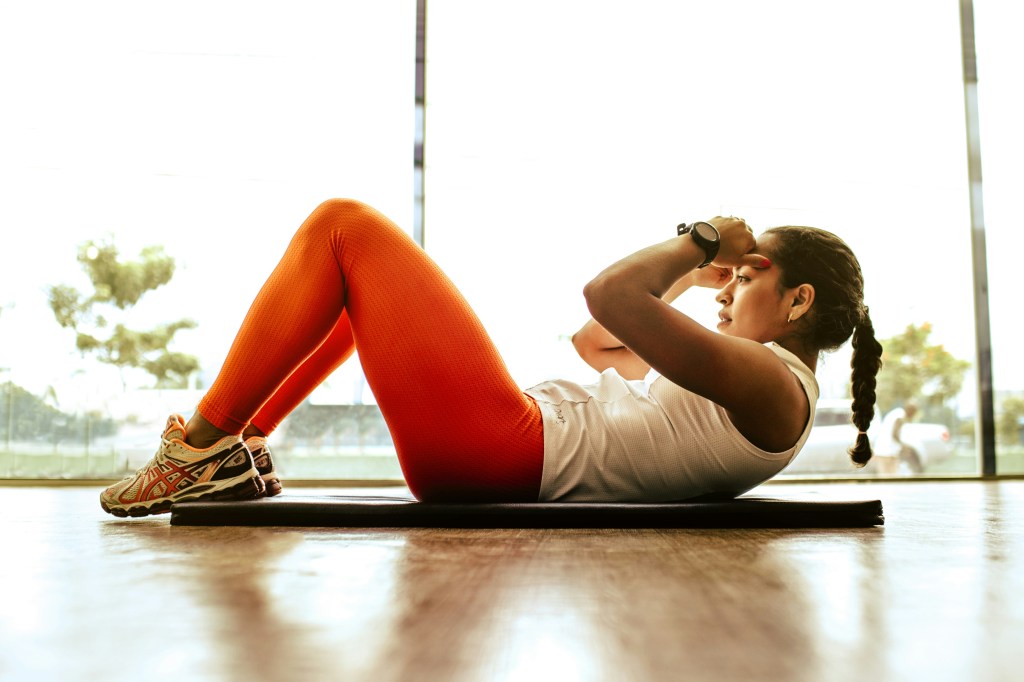
Many people who menstruate are probably familiar with the changes they experience throughout their menstrual cycle when it comes to how they feel. Most people have certain ways of coping – maybe eating favorite comfort foods or using a heating pad for really bad cramps. But what exactly is going on in your body throughout your cycle, not just while you’re on your period? And, if you’re a particularly active person, how can it affect your training?
Let’s take a closer look at the relationship between your menstrual cycle and your physical activity, as well as what you should keep in mind throughout different phases of your cycle.
The Menstrual Cycle: an Overview
The menstrual cycle is experienced by people who have ovaries and a uterus and are genetically able to become pregnant and grow a child. The purpose of the menstrual cycle is to prepare the body for a possible pregnancy. Every individual’s menstrual cycle is different, and it can last anywhere from 23-38 days – just about a month long.
There are four phases of the menstrual cycle: the menstrual phase (your period), the follicular phase, ovulation, and the luteal phase.
The menstrual phase begins when an egg from the previous cycle hasn’t been fertilized. During your period, you shed the lining of your uterus, which has thickened in preparation for egg implantation. This shedding includes a combination of blood, mucus, and tissue.
The follicular phase starts on the first day of your period, so these two phases overlap somewhat. During this phase, hormones signal for your ovaries to produce follicles, each of which contain an immature egg. The healthiest one will mature, while the other follicles are reabsorbed. During this phase, the lining of your uterus begins to thicken.
Ovulation ends the follicular phase. This is when the ovary releases the mature egg, which travels down the fallopian tube toward the uterus. Ovulation lasts about 24 hours. If the egg isn’t fertilized in that window, it will die or dissolve. It’s important to note here that conception is possible outside of these 24 hours. Sperm can live up to 5 days. The most likely chances of pregnancy occur 3-4 days before ovulation and 1-2 days following.
During the luteal phase, your body releases certain hormones to prepare for pregnancy. If you don’t get pregnant, some hormone levels will drop, which triggers the onset of your period and brings us back to the beginning of the menstrual cycle.
The Menstrual Phase: Can You Exercise on Your Period?
The menstrual phase is the part of the cycle that most people are familiar with, and it’s likely when you notice the most changes in your body or how you’re feeling physically. Because of that, it’s likely where your mind goes when you start thinking about the relationship between your cycle and your physical training. So, can you exercise while you’re on your period?
The answer is yes! In some cases, you might even find that being more physically active can help alleviate certain symptoms you may experience during your period.
Benefits of Exercising on Your Period
Most of us are pretty well aware of the many physical and mental benefits of exercising – and they definitely extend to when you’re on your period. Let’s take a closer look at some of the benefits specific to exercising while on your period.
Decrease Premenstrual Syndrome (PMS) Symptoms
If you’re someone who experiences pretty bad PMS, such as fatigue or mood swings, exercise – aerobic exercise specifically – may help lessen these symptoms. Aerobic exercise includes anything that can help increase your heart rate and lung function, such as brisk walking, running, cycling, or swimming.
Elevate Your Mood
Since physical activity naturally releases endorphins, exercise can help you elevate your mood and feel better, especially if you’re feeling any range of negative emotions while on your period. Plus, since exercise can help relieve some pain associated with your period (keep reading for more!), you might find yourself feeling happier and calmer without those physical sensations as well.
Decrease Painful Symptoms
In some cases, exercise can help relieve some of the painful symptoms associated with your period such as cramps, headaches, or back pain. Some of this phenomenon may be due to the movement itself and the increase in blood circulation, and some may be due to the release of endorphins, which can be considered a natural painkiller.
Training Throughout the Other Phases of the Menstrual Cycle
Now that we’ve discussed exercising during the menstrual phase of your menstrual cycle, let’s take a look at how the other phases of your cycle might affect your training. Research in this area can be mixed – some studies suggest that the various phases and hormones associated with them can affect physical training, while others find little significant difference.
Regardless, individuals who menstruate are certainly experiencing fluctuations in hormones throughout their menstrual cycle, and this can definitely impact how they feel. Let’s dive in and see what you can likely expect from the different phases of your cycle.
The Follicular Phase
During the follicular phase (the first part of which overlaps with your period), your hormones (think estrogen and progesterone) are at their lowest level throughout the month. They begin to rise gradually throughout this phase, but they’re still low compared to other phases.
Because your hormone levels are so low, and you’re likely not experiencing many symptoms from rising or fluctuating hormone levels, this can be a good time to work hard on your physical training. Think heavy lifting, sprints, plyometrics, long runs, or other forms of intense exercise.
This is not to say that you should do away with rest days, or increase your training frequency – it’s still critical to listen to your body and give your muscles the chance to recover between training sessions. It’s just that you may be more likely to have rewarding workouts when you choose high-intensity activities during this phase due to the lower levels of your hormones.
Ovulation
During ovulation, estrogen levels begin rising quickly and you might find a corresponding lift in your energy levels as well. The rise in estrogen can also result in a slight rise in your body temperature.
Because the ovulation window is so short, there isn’t necessarily a specific type of exercise that you should prioritize during this time.
The Luteal Phase
As your body passes ovulation and enters the luteal phase, you’re likely to experience different symptoms from the changes in your hormones. Estrogen continues to rise only to then fall pretty quickly, and progesterone starts to spike as well. These quick changes in hormone levels may start to make you feel more tired or sluggish.
The rise in body temperature from ovulation continues during this phase and may make you more sensitive to hot or humid environments, like hot yoga studios, sweaty gyms, or running outside on a hot day.
Progesterone can also increase your resting heart rate and breathing rate. Combined with an increase in your core body temperature, these can all be interpreted by the body as additional strain. Because of this, you might feel like you have to work harder than usual during your workout to attain the same results.
Your luteal phase can be a particularly good time for low-to-moderate strength training, yoga, pilates, stretching, and mobility exercises.
Every Person Who Menstruates is Different
While we can take a look at hormone levels across the different phases of the menstrual cycle and get a pretty good idea of how someone might be feeling, every single person who menstruates is different and may experience their cycle differently. Hormone levels can vary from person to person, and how exactly those hormone levels affect them – as well as what they feel is best for their body – can be different as well.
In addition to experiences of menstrual cycles varying widely, there’s certainly an opportunity for more research in this area, specifically regarding athletes who menstruate and any effect it may have on their training and physical activity. While many studies demonstrate results that the menstrual cycle can have some effect on training, there are other contradicting studies, and there’s not a wide enough body of research to draw definitive conclusions.
Work With Your Body, Not Against It
One of the major benefits of having a regular fitness routine is getting to know your body – what feels good, what doesn’t, what you enjoy, and what you find the most rewarding. Understanding how other aspects of your body (like your menstrual cycle) may or may not interact with your physical training can make a big difference in how you feel overall.
But that can feel like so many things to keep in mind. You’re probably thinking, “Do I now have to track my menstrual cycle as well as what I’m eating and doing in the gym? How can I keep all these balls in the air?” Sometimes, all you might need is a little support.
Working with a fitness and nutrition coach can provide the support and accountability you need to take your health into your hands and do what’s best for your body. If you want to learn more about working with an online coach, read the comprehensive guide. And if you think online coaching is for you, head to the inquiry form so that we can connect one-on-one.
Written by Emily Greffenius. Reviewed by Meghan Farrell, CPT, BSN
 MFarrellFIT
Leave a comment